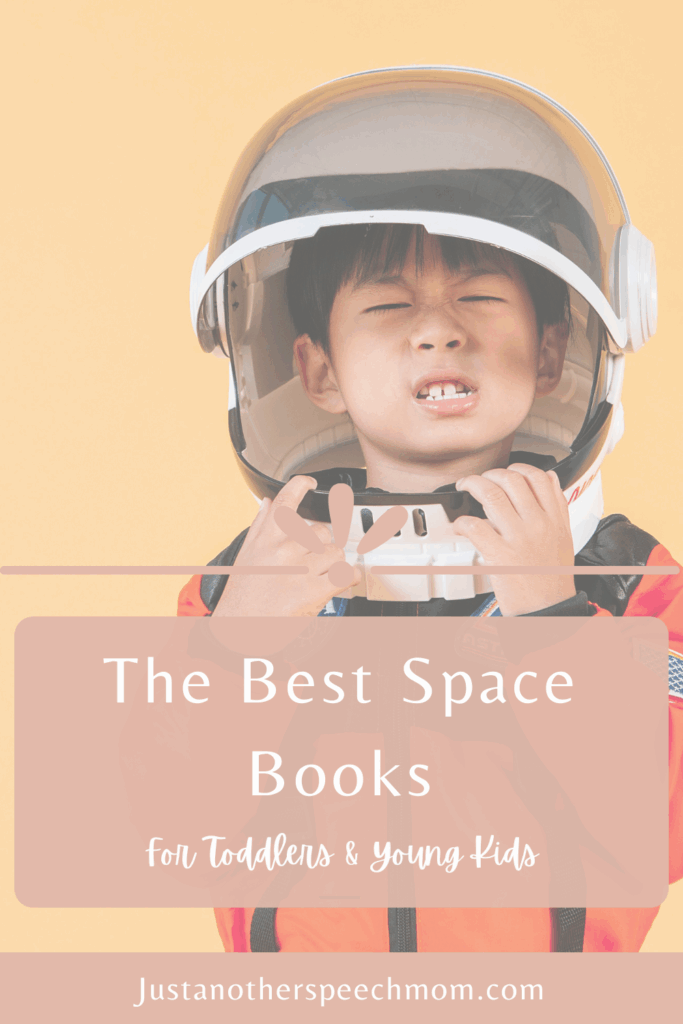
3 Space Books for Toddlers & Young Kids
As a pediatric speech-language pathologist and a parent of two young explorers, I’m always looking for ways to turn everyday moments into rich opportunities for building language and connection. And storytime? It’s one of the very best tools we have.
When we read with our kids, we’re doing so much more than sharing a book. We’re expanding vocabulary, modeling sentence structure, sparking imagination, and encouraging those back-and-forth interactions that are the foundation of strong communication skills. And so much more! Books with strong visuals, engaging storylines, and built-in opportunities for conversation are especially powerful.
And what better theme to spark curiosity and new words than outer space? Rockets, astronauts, planets, aliens – space books are packed with exciting verbs, descriptive language, and concepts that invite open-ended questions and pretend play.
To my fellow moms trying to make the most of bedtime, here’s a list of my favorite space-themed books for preschoolers and early elementary-aged kids. Each one brings something special to the table for supporting early language development – and plenty of fun facts along the way.
3 Space Books for Young Kids
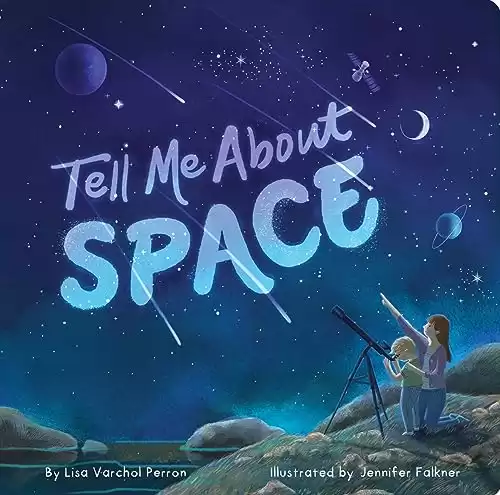
The perfect nonfiction board book for your littles. This is perfect for ages 3‑6, and uses a playful Q&A format to introduce young readers to basic space concepts. My 3YO & 5YO love this one!

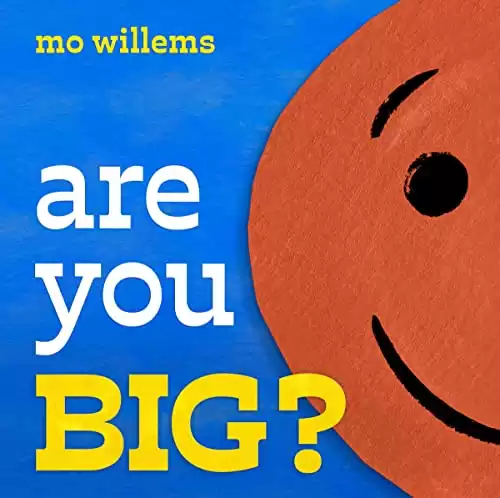
While not *specifically* about space, this playful, STEM inspired book is a great intro for your little ones for learning about how BIG our solar system is! From the moon, to Earth, the sun, the start Pollux, and a galaxy cluster. We love this playful book that sparks a lot of questions and curiosity!
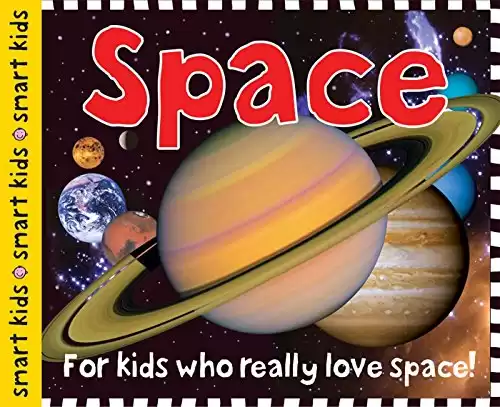
This bright, fact-filled picture book is perfect for curious kids aged around 4–7. It covers a wide range of space topics for your little learners - from our Solar System and Milky Way to all the planets! This is a good starter book of facts with bright illustrations and just the right amount of text.
Want the full list? Check it out here!
How do I target language skills in non-fiction books filled with facts?
My 5YO is super into non-fiction books filled with facts right now – specifically books about space and dinosaurs. So how do you support language skills when there’s not a traditional fiction ‘story?’ I got you.
Vocabulary Building: Exposure to topic-specific words (animals, science, history) expands children’s lexicon.
Understanding Informational Text Features: Recognizing headings, captions, diagrams, labels, and glossaries.
Sequencing and Organization: Understanding chronological order, cause-and-effect, or classification in factual content.
Comprehension of Main Idea and Details: Identifying key facts and supporting information.
Questioning and Critical Thinking: Asking and answering “who, what, when, where, why, how” questions.
Comparing and Contrasting: Recognizing similarities and differences between concepts, species, places, etc.
Retelling and Summarizing: Practicing concise retelling of facts learned.
Use of Descriptive Language: Learning and using adjectives and adverbs from the text in their own speaking or writing.
Making Predictions and Inferences: Using prior knowledge plus textual clues to anticipate facts or outcomes.
Understanding Text Purpose and Author’s Intent: Recognizing that non-fiction is to inform or explain.
Using Domain-Specific Language: Becoming comfortable with academic or subject-specific terms.
Connection to Prior Knowledge: Relating new factual information to existing understanding or experiences.
Clarifying and Asking for Help: Practicing phrases and questions to clarify meaning (e.g., “What does ____ mean?”).
Pronunciation Practice: Reading or hearing proper pronunciation of technical or scientific words (my 5YO regularly corrects me, I’m sure you can relate)
Want more themed book lists for preschoolers and young kids? Check these out!
6 Books to Encourage Simple Inferences During Storytime
Birthday Books to Celebrate Your Child
Books to Help Your Child Process Feeling MAD
There’s incredible amount of language skills we are supporting as we read to our kids. As always, happy reading!