5 Board Games that Encourage Teamwork with Kids
…and How to Build Language Skills While You Play!
As a pediatric speech-language pathologist and mom of two, I’m always looking for ways to turn everyday moments into opportunities for connection, communication, and growth. One of my favorite sneaky (and super fun!) ways to support language development? Team-based board games.
Teamwork-focused games not only teach kids valuable social-emotional skills like cooperation, turn-taking, and problem-solving—they also open the door for rich language use without any pressure. You’re bonding, laughing, and playing…and your child is practicing communication skills the whole time.
Here are 5 of my go-to cooperative board games for my own kids and in my therapy room along with tips for how to support language growth during each one.
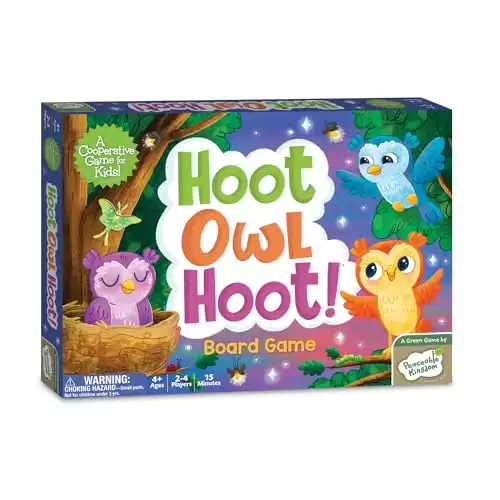
Ages: 4+
Why it's great: A perfect intro to cooperative games, this one has players work together to help all the owls get back to their nest before the sun rises.
Language-building tip:
Use this game to practice planning and cause-and-effect language. Try phrases like:
- “If we use this card now, what might happen?”
- “What’s our best move to help all the owls?”
You're building: Predictive language, flexible thinking, and early reasoning

Ages: 5+
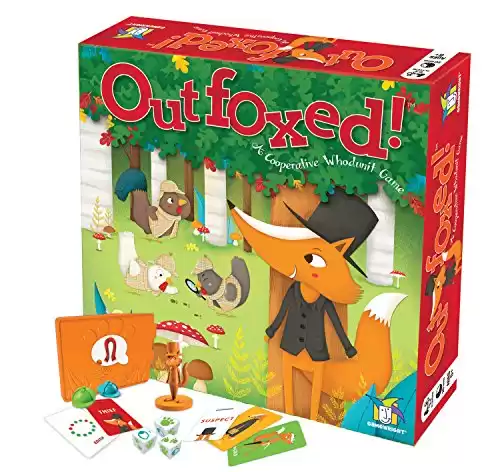
Why it's great: Kids work together to solve a mystery and find out which fox stole the pie!
Language-building tip:
Encourage your child to narrate their thinking. Ask open-ended questions like:
- “Why do you think we should check that suspect next?”
- “What clue did we just find, and what does that tell us?”
You're building: Inference skills, sequencing, and descriptive language.
Ages: 5+
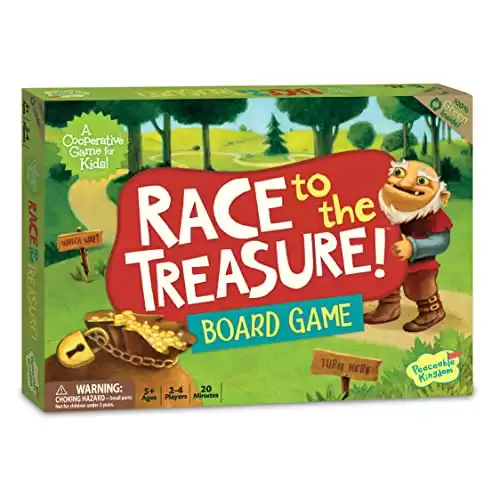
Why it's great: Players build a path to collect keys and reach the treasure before the ogre does.
Language-building tip:
This is a great one for spatial language and directional vocabulary. Model and encourage words like:
- “Let’s go above the ogre”
- “Turn the path to the right”
- “We’re next to the key!”
You're building: Prepositions, sequencing, and collaborative problem-solving language.
Ages: 3+
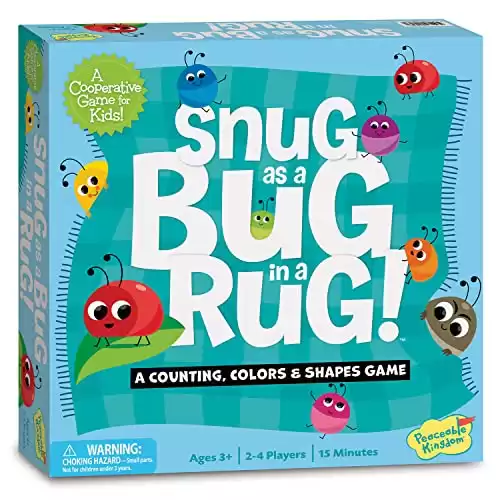
Why it's great: This beginner cooperative game has players work together to get all the colorful bugs into the rug before the stink bugs come out. It's perfect for little ones just learning how to take turns and follow simple directions.
Language-building tip:
Use this game to practice color, shape, and number vocabulary, and to support early categorization skills. Try prompts like:
- “Can you find a bug with red AND spots?”
- “Which bugs are big? Which are small?”
- “What do we do if we spin a stink bug?”
You're building: Descriptive language, matching concepts, and early listening/following directions.
Ages: 4+
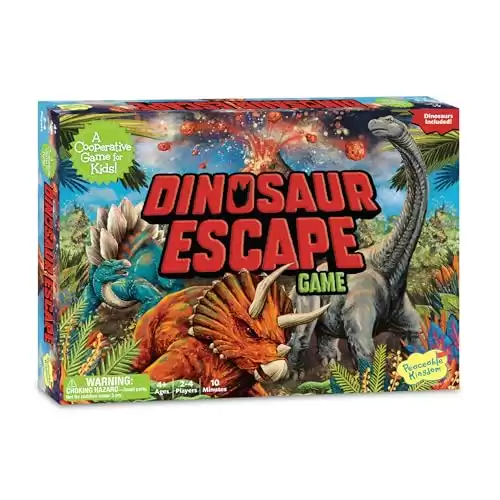
Why it's great: Players work as a team to find and rescue three dinosaurs before the volcano erupts. It's a blend of memory and strategy, with a fun prehistoric twist.
Language-building tip:
Encourage your child to describe locations and explain memory strategies. Use prompts like:
- “Where did we see that dino last time?”
- “What’s your plan to find the next one?”
- “Can you tell me what we’ve done so far?”
You're building: Recall, sequencing, spatial vocabulary, and strategic storytelling.

A Few More Natural Tips for Building Language While Playing
- Let your child lead: Follow their ideas and support their language by repeating, expanding, or asking a follow-up question.
- Think out loud: Model your own thinking. This gives kids a blueprint for how to organize and express ideas.
- Celebrate communication, not just winning: Highlight great teamwork and clear communication during the game.
- Add a “post-game chat”: After the game, ask what their favorite part was, what strategy worked, or how they felt when you won or lost together. These casual conversations build vocabulary and emotional expression.
Final Thoughts
Playing games with your kids isn’t just a fun way to pass the time – it’s also a powerful way to build connection, cooperation, and communication. These teamwork-based games sneak in language growth in the most natural way possible: while you’re laughing, thinking, and playing side-by-side.
So the next time your kids ask to play a game, grab one of these favorites, cozy up, and know that while you’re helping owls fly home or solving fox mysteries… you’re also building lifelong language skills.
🧩 Which teamwork game is your family’s favorite? Drop it in the comments or share on Instagram and tag me [@justanotherspeechmom]—I’d love to hear what your kids are loving!
Want more book suggestions? Check out these posts!
6 Books to Encourage Making Simple Inferences
Promoting Phonological Awareness through Books with Rhyming Text
Books to Help Your Child Process Feeling Mad